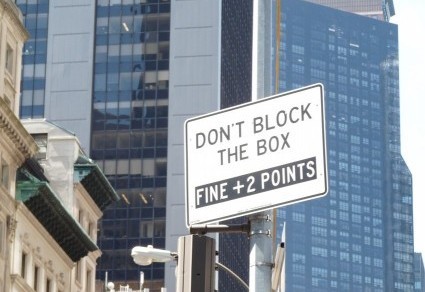
Punctuation: very small marks governed by a very big set of rules, many of which don’t even have the grace to stay the same from one country to another. Caring about hyphens and apostrophes takes pickiness to a new height, doesn’t it? Yet I can’t help wishing that someone had edited these headlines and labels a little more carefully.
I dare you to decode this one on first reading:

I’ve read it several times, as well as the accompanying article, and I still don’t know who’s who and where they are. I get that someone’s in-house and someone’s at home, and I’m sure that neither is Nureyev, the ballet superstar who died in 1993. Also, why hyphenate in-house? A small consolation is that the apostrophe is used correctly. Not so in this label:

I don’t know how many coffee beans are in the jar, but I do know that I don’t want to be our (or anyone’s) guess. Nor do I want to make 3 guess’s.
If only I could poach the apostrophe from guess’s and insert it below:

Your more? Advertiser, you’re better than that! And if you’re not — well, call me picky, but in that case I’d rather be just a number.


 Somehow “ped” got a period, but “dept” didn’t. Both are abbreviations, “ped” being the shortened form for “pedestrian” and “dept” for “department.” In case you’re wondering (actually, despite the fact that you’re not wondering at all), I should mention that this NYC “dept” isn’t consistent when it comes to punctuation relating to walkers:

 I understand that consistency is difficult to achieve in, say, a 200-page document. But if you’re working with only two sentences, you ought to be able to spare a period for each or omit the punctuation mark entirely.
 Okay, no period at the end of this sentence: I’m used to that. But I can’t find any reason for a comma before the conjunction “or.” For that matter, I can’t find a reason for the text as written. Why not just say “DO NOT FEED BIRDS”? Theories welcome. Punc also.


