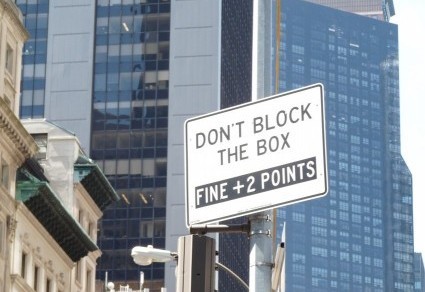
Tag Archives: English usage

Mysteries

No matter what else I’m reading, I always have at least one mystery novel on my nightstand. At the end of a long day of bad news — far too frequent, these days — I need to dip into an orderly world where justice prevails. Yes, I know some mysteries deviate from that pattern. I don’t read those. How do I know whether a mystery fits my criteria? I read the last page first. Real life is surprising enough! Plus, I nearly always forget the identity of the murderer by the time I get to the end of the second chapter.

When I’m out and about, I enjoy mysteries also. Sometimes they show up in an overheard comment: “He’ll do for a starter husband” (one twenty-something woman to another) and “Have you brought your business to a successful conclusion?” (dog walker to poodle). Before you ask, yes, these are real things New Yorkers said.

My favorite mysteries appear on signs. Here’s one:

No one can read this without wondering which ingredients the store won’t sell. Unethically sourced shea butter? Uranium? Magic beans? It’s a mystery.

Here’s another mysterious sign:

Let’s get practical: How does the site owner know what parents have said to their kids? Does telling children of the dangers of trespassing fulfill the parents’ obligation? (“I told you, now go and trespass if you want.”) Also, isn’t trespassing anywhere a dangerous activity? Or only on this site?

Another mystery:

I’m ignoring the subject-verb agreement error (Shower Caps should Keep, not Keeps). What I really want to know is whether there are Shower Caps that make hair wet. Also, is there a shower cap that keeps something other than HAIR DRY? Maybe there are Shower Caps for toes? Or belly buttons? Elbows, perhaps?

The mysteries presented here don’t conclude with justice triumphant, but neither do they honor the guilty. They’re just mysteries that add a little fun to my life and, I hope, to yours also.

Private Lives

In this age of social media, you might think that nothing is private. Think again:

I do my own laundry, but if I sent it to a LAUNDRY, I’d select this store. My clothing is on the shy side and prefers not to whirl around with others’ duds.

Here’s an odd take on privacy:

I’d love to see a definition of personal hygiene practices. If they’re prohibited, must you forgo handwashing after using these Restrooms? Also, why practices? Is personal hygiene one of those skills you have to spend 10,000 hours on to perfect? I snapped this photo in 2017, so perhaps the word practices is out of date. We all learned how to wash our hands during the pandemic, didn’t we?

This Private Property requires good posture:

Somehow I thought the decision to lean or not to lean was a private matter.

On a more personal (but not private) note, I wish you and your family a happy, healthy 2026.

The Language of Medicine

Right around this time last week, a surgeon inserted a tiny camera and an equally tiny tool into the most poorly designed human joint. I refer, of course, to the knee. Seriously, Evolution, were you napping by the time you got to the middle of the leg? I was fortunate to have excellent medical care, and even more fortunate to have medical insurance. I am aware that many others are not so lucky. And before I move on to the language of medicine, I will climb — carefully, because, you know, the knee — onto my soapbox. Health care is a right, not a privilege, and our society should treat it as such.

During the past week I’ve thought a lot about the language of medicine. Not the scientific, but the ordinary terms. For example, what did I have? A procedure? To me that sounds euphemistic, like real estate agents’ calling an apartment “charming” (last renovated when Eisenhower was president) or “cozy” (comfortably accommodates two people, standing up). To me surgery is more serious, something that happens to a vital organ. Perhaps the middle ground is operation, a term useful for military invasions and public relations blitzes.

My procedure/surgery/operation took place in a facility, not in a hospital (a serious, stay-over place) or an office (less serious, with magazines in the waiting room) or a clinic (middling serious). The root of facility is facilus, Latin for “the means or unimpeded opportunity for doing something.” I’m not sure about the unimpeded part (see note above on insurance), but the facility I went to certainly did something. A good something! My knee feels better.

The last term is patient, from the Latin patior, “to suffer or endure.” I got off lightly, in this instance, with not much beyond soreness. I didn’t even have to be patient, because everyone involved in my procedure/surgery/operation kept to the schedule. I’m sure my future holds more medical (INSERT PREFERRED TERM HERE), because I’m senior/older/in my golden years/not dead yet. I can only hope everything proceeds smoothly, and that the insurance company approves.

Moody Blues

The national mood, and, I must admit, my own mood, is so down that an elevator to the sub-basement wouldn’t reach it. What to do in response? Well, you can have a serving of this:

(Photo courtesy of my friend Catherine, who prefers grape jelly and proper spelling)

Judging from the muttering and sometimes shouting of Gripe(s) I hear, this is a popular option. However justified your Gripe, though, venting your feelings is a short-term fix at best.

An alternative:

(Photo courtesy of my friend Deborah)

In my experience, inflicting the SILENT TREATMENT on others seldom yields positive results. The target may experience the silence as agreement or worse, welcome it as a peaceful interlude.

What else can you try? Here’s a tempting option:

The problem with BREAKING, REMOTE or otherwise, is that at some point you have to put the pieces back together.

One more:

I posted this photo of a New York Times headline eight years ago, commenting on the repetitive nature of the expression Failing to Succeed. (What’s the alternative — Failing to Fail? Succeeding to Success?) But now I’m focusing on Giving Compromise a Try. Not on matters of principle, of course. But maybe finding common ground around the edges of less important disagreements can lead us, and our national mood, out of the sub-basement. Perhaps as high as the basement? Surely that’s not too much to ask?

If you know, you know . . .

A former student of mine recently put out a call for catchphrases unique to a family. If you’re in the family, you know the meaning. If you’re not in the family, you don’t have the faintest idea what’s going on. These signs fall into the “if you know, you know” category. They make perfect sense to somebody, somewhere, but they puzzle to the rest of us. Here’s one:

What does RADIANT TUBING do? And what is it radiating — joy, sunlight, cosmic rays? Why must we BEWARE? And does BEWARE mean “don’t come within three miles of this sidewalk” or “take your piledriver somewhere else”? Theories, or better yet, actual information, welcome.

Another enigmatic ad:

I live in the sort of neighborhood where doing one’s own chores is not a given. Even so, I’m surprised that someone would hire someone else for BREAKING a REMOTE CONTROL device. In my experience, all you have to do is throw the thing at a wall. The wall generally cracks, though. Maybe that’s a reason to hire a pro?

It’s well known that some of us are not technologically literate enough to figure out an app. So it would not shock me to see a service offering help with, say, downloading, installing, and using an app. But the service offered by this sign goes a step too far:

I don’t need someone to PICK-APP for me. I can select an app all by myself!

Last one:

No, this doesn’t refer to a haircare product. It concerns parchment paper. Does anyone actually measure and cut the paper and then reinsert it for Decurling? This definitely falls into the life’s-too-short category for me. I use my hands.

Wishing you well in these dog days of summer! If your family has a catchphrase, feel free to share it.

Something’s Missing

Every once in a while I see a sign that’s missing something: a letter, a word, a punctuation mark, or, all too often, clarity. Consider this notice, which was chalked on an old-fashioned sandwich board near the entrance to a rather fancy (i.e. expensive) food store near me:

I’ve cropped the photo, but nothing I removed answers this question: Place your party platters & cake where? The sign appeared at the beginning of a holiday season, so presumably the store was hoping for advance notice instead of a same-day request to rescue a host who invited 235 people to a celebration despite having only two olives and a bottle of champagne in the refrigerator. Which I’m pretty sure in my neighborhood is not all that rare. My sympathy is with the sign-writer, who neglected to squeeze the word “order” into the message.

This notice, which my friend Andie sent me, is missing an important definition:

I’m guessing the store doesn’t want to Refund any money to its customers. But what does Redone mean? (And why are Refund and Redone capitalized?) If I buy a salad and report that it’s a bit vinegary, for example, will the store rinse off the leaves and apply new dressing?

I’ve held onto this sign for a while, trying to decide whether it’s an insult to neighbors (RESIDENT TRASH) or an attempt to fend off TRASH that turned tourist and went sightseeing inside this bin:

Theories welcome.

I doubt I’ll ever patronize this establishment:

Some crucial information is missing from this sign: How deep are the cuts? Are we talking scalp-scrapes or decapitation? Also, do the police know?

My late husband spotted this sign some years ago, in a major-appliance store that went out of business soon after he snapped the photo:

What’s missing from this label, of course, is a list of the food that comes with w/ this Refrigerator. Is it stuffed with macadamia nuts and caviar or leftovers from the manager’s lunch?

All joking aside, we’re all missing something these days. Whatever you’re missing, I hope you find it!

Traveling in New York

I haven’t owned a car since 1975, so I pay close attention to notices concerning public transportation, the subject of this post. First is a recent headline from a publication that should know better:

Every bus in New York City carries a lot of people, but until I saw this headline I didn’t know that the Trump administration was on a bus. Perhaps that’s a protective factor. If someone volleys back at you while you’re on a bus, you’re a moving target. Side point: Is it possible to volley forward instead of back?

Moving on to subways, here’s a message that popped up on my phone:

Question: If we (presumably the MTA, which oversees public transit in New York) removed a train mechanical problem from service, shouldn’t the Northbound 6 trains run faster? With fewer delays? Also, does this notice imply that if a train mechanical problem is added, instead of removed, we’ll zip along more quickly?

Here’s a sign about the most common form of traveling in New York City — WALKING:

Lots of problems with this sign, but I’m interested in just one aspect, the reference to WALKING PASSPORT. I don’t know what your PASSPORT does, but mine is definitely sedentary.

This last sign doesn’t reflect my sentiments about my home city — except for occasional moments on a crowded bus or train when I yearn for a brief trip fitting this description:

Sadly, peace of mind is a rare commodity these days — in New York and, well, anywhere. If you locate a spot that qualifies, do let me know.

Grammarian Abroad

Travel is enlightening — but also befuddling. Having just returned from vacation, I’m reliving my adventures by examining signs I spotted during this trip and others. I find myself more confused than ever. Here’s a sign posted on the window of a school in Venice:

Three lines are simple to decode: They teach English, French, and German. But what’s Inglese Postcoloniale? My translation app says “Postcolonial English.” Okay, which colony are we talking about? America after the Revolutionary War? Britain after the Empire morphed into the Commonwealth? A variety of English spoken in former Italian colonies?

Next is a sign my family spotted in Tokyo:

Does the collision occur only when the pedestrian is oncoming, or is an outgoing collision also possible?

Judging from this sign, pedestrians in London should certainly proceed with caution:

I’m all for Road Safety in London (and everywhere else), but killing pedestrians For your own Safety seems counterproductive.

Amid the confusion, I did find one perfectly clear sign:

Bravo, Madrid! Bravo, hotel owner! Even the most jet-lagged travelers, assuming they speak English, can understand this message. Would that all our communications were so easily decoded!

No decoding needed for this message: I wish you happy travels, on the road and in your dreams.

Covid-ersary #5

It’s been five years since Covid upended everything. In those first, awful months, NYC shopkeepers put up notices about masks and social distancing. I photographed those signs because it seemed important to have visual evidence of a historic moment. Now, as I go through my files from that deadly period, I find other signs that describe what was happening. This one, for instance:

Air Duck. That’s what lots of us were trying to do, but you can’t really Duck something that is (a) everywhere and (b) necessary for life. Instead of Duck-ing AIR we had

also known as sitting in the living room and Zooming emotions to anyone who’d listen, then listening to them VENTING IN PLACE. Essential workers didn’t have the luxury of staying IN PLACE, of course, either with or without VENTING. They had to show up, do their jobs, and hope they’d survive.

Then there’s this sign:

In normal times I’m a shop-daily person, mostly at local stores. Sheltering myself from the virus meant that I did indeed NEED A DELIVERY. And it was PERSONAL: My safety was at stake. It was also sad. I missed the quick conversations at checkout, the overheard remarks in the aisles, the chance to decide whether the vegetables were ripe. It was PERSONAL for those making a DELIVERY, too. Among the poorest New Yorkers, they didn’t have the luxury of staying home. Like essential workers, they had to do their jobs, however risky.

Finally, here’s a sign I spotted on a well-masked walk:

I’m not sure exactly what Pharmaceutical CATERING is or whether it would have eased the need for VENTING IN PLACE. I suspect more than a few people turned to Pharmaceutical help of the not-strictly-medicinal kind, though probably not on the level of CATERING.

I generally end my posts with a quip, but the pandemic requires something more serious. So I’ll just say this, which is as PERSONAL as it can be: We should all be grateful to those who put their lives on the line — doctors, nurses, cops, firefighters, DELIVERY personnel, and many more.

Why I Love New York

I love my city for many reasons, prominent among them its mix of cultures, with interactions that are not always easy but inevitably interesting. A few pictures to prove my point:

This was taped to the window of a small grocery store. For the non-Spanish-speaking, Buscamos means “we are searching for.”

This was on sale at an iconic NYC market:

Europe (French) plus South America (PERU) equals New York.

If you’re too busy to cook, you might consider eating this:

I have to wonder what they put in an Irish Bento Box.

Not so welcoming to Japanese food is this restaurant:

I’m not sure whether they sell NO SUSHI or refuse to sell it IF U DON’T HAVE I.D. (The subtitle for this photo should be “The Problem with Bulleted Lists.”)

In keeping with the pace of life in my hometown, I’ll keep this post short and reserve the signs for Russian mathematics, Brazilian Wax, Japanese dry cleaning, and German Kitchens for another international, New York day.