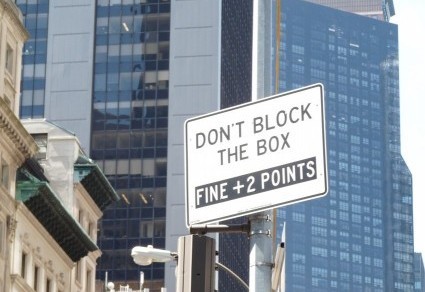
When I snapped this photo a couple of years ago, I had no idea how accurate its message would be, nor how long it would remain relevant:
Rough indeed. As Covid-19 turns toddler age, we’re all fraying at the edges. And it shows! Clarity has turned to ambiguity and often dipped into downright incomprehensibility, as in this headline from the Seattle Times:
I’m happy to report that later editions of the paper added an H to pus. I am even happier to confirm that there is no pus in the hepatitis A vaccine — or any other vaccine, for that matter.
Covid has also melted our sense of time:
An hour that lasts from 12:00 PM – 10:00 PM — that’s 600 minutes! I do hope employees aren’t paid an hourly wage. Sidepoint: Why not say Every Day instead of Monday – Sunday?
One last thought, about a photo my friend Sean sent me:
Please DON’T light up Christmas with a can of fuel. The road is rough enough already. Instead, stay safe. See you in the new year!
Innumeracy — the mathematical equivalent of illiteracy — is on full display in signs I’ve seen around New York in the last couple of years. Take a look at these:
Notice that Off-Broadway Week is 14 days long and Muji Week runs for 32 days. That’s good news for ticket-buyers and shoppers, but potentially bad news for actors, crew, and other employees. I hope they get paid by the hour, not by the week.
Here’s a sign I spotted on the First Avenue bus:
A note to non-New Yorkers: Manhattan streets are laid out on a numbered grid. The numbers get larger as you travel uptown and smaller as you travel downtown. The photo is a bit fuzzy (snapped on a moving vehicle) so I’ll type out the relevant parts: The stops are 14th Street, 23rd, 34th, 29th, and 42nd. Loopy route or miscalculation? Judging from the ride I took, I can affirm that the latter description, unlike the sign, is correct.
Before you go, check your numeracy by solving a math problem based on this sign:
If Alex and Sasha polish off six, 8 FL OZ servings of this beverage, how many calories does each ingest if Sasha drinks twice as much as Alex?
This is the spot where I should place the answer, upside down so you’re not tempted to peek. That’s beyond my Word Press skills, so I’ll leave you hanging. Post your answer in a comment, and I’ll let you know whether it’s correct. If you have trouble solving the problem, meet me on the uptown bus, somewhere between 34th and 29th Street, and I’ll tell you the answer.
On some of my excursions around New York City, I find signs that are stunningly obvious, the equivalent of a message I once saw on a book of matches: “Warning — may cause fire.” Here’s one such sign:
Does the owner think anyone’s going to pay $26.00 for amateur haircuts & shaves? Professional would seem to be self-evident, given that someone is paying rent, utilities, and so forth to hang out inside and tend to customers’ tresses in exchange for money.
Also obvious is this sign I saw in Midtown:
If you were searching for a satellite, where else would you look? Under the sidewalk grate? Not obvious is what’s holding the satellite. A giant leash? A Star Trek magnetic field? Also, why are they holding it? Send the satellite into orbit, already! Despite the pandemic, rents in New York City are high, and Space is free.
Also unclear is the meaning of this message, which I glimpsed on the side of a van belonging to a cleaning service:
I have always assumed that every doorman in my building showers, with perhaps an occasional bath as a change of pace. That a doorman might opt for dry cleaning never even entered my mind. Now that the thought is there, though, I wonder whether the dry cleaning ticket is pinned or taped on, and to which body part. Actually, on further reflection, I’d rather not know.
One more puzzler, to balance out the pair of obvious signs earlier in this post:
The bar looks old, so I’m not questioning the age of the place but rather the quotation marks around 100, which are most commonly used to indicate a direct quotation. That doesn’t seem likely here. Nor is it likely that the marks signal doubt about the accuracy of the information enclosed by quotation marks, as in We listened to Henry’s “singing” until our eardrums ruptured. The dates show 100 years (2021 – 1921 = 100). So why quotation marks?
Grammar has a bad reputation, which it sometimes deserves, because many grammar rules are just conventions. You wouldn’t misunderstand this sentence if I deleted the apostrophe, would you? But some rules, such as those governing the placement of descriptions, serve a real purpose. That purpose is clarity, which this label lacks:
There’s no cat or chicken in my New York City apartment, so I am clueless about the nature of the product in this photo, which my friend Catherine sent me. So help me out here, cat/chicken fans: Is this FOR or FROM a chicken that lives indoors? Can an indoor cat eat outdoor chicken? Side point: Does the designation kittens to adults mean that this product is intended only for the feline equivalent of a teenager?
The next photo comes from my friend Mary:
I’ve watched Ray’s show and feel confident that she’s neither a cannibal nor a dog killer. Thus I’m not asking law enforcement to find out whether there are any missing Ray relatives, and I won’t petition the SPCA to check on the dog, who appears uncooked and healthy in this photo. However, I wouldn’t mind turning the headline writer over to the grammar police on a first-degree, misplaced-modifier charge.
I also recommend that law enforcement investigate this business, a restaurant in Midtown I glimpsed through a bus window. I was so surprised by the sign that I hopped off at the next stop and walked ten blocks back to double-check:
Pharmaceutical catering? Huh. What exactly is on the menu? Have these caterers given a whole new meaning to “food for thought”? Has the Food and Drug Administration approved the menu? Should the Drug Enforcement Agency get involved?
All this talk of food has given me an appetite. As I tuck into my indoor, completely legal, non-psychoactive lunch, I wish you bon appetit with yours.
We live in dangerous times. In addition to the pandemic, what used to be once-in-a-century weather catastrophes now take place every month or so. But danger comes from more than climate change and viruses, as these signs make clear. First up, a notice affixed to the fence around a motel pool, photographed by my friend Kim:
I can deal with children who splash water all over everyone. I don’t mind an occasional collision with someone who swims laps faster than I do. But if the Carnivorous can’t control themselves in the pool, I’m out of there. Fellow swimmers should not be dinner.
Nor should employees. Jeff sent this photo of a burger restaurant’s sign:
I don’t think minimum wage, or even much more than minimum wage, compensates new hires properly if they have to hop onto the grill or run themselves through a grinder. I prefer a secretingredient that’s free of human DNA, don’t you?
From Sean:
The image is a bit small, so I’ve retyped the message here: Citizen Disposal Facility. I wonder if that’s where you end up if you don’t pay your taxes in the County of Fairfax?
Also from Sean, an appropriate response to the above sign:
I should probably conclude this post with a disclaimer in order to forestall the spread of cannibalism stories on social media, which would inevitably give rise to anti-cannibalism protests and then to anti-anti-canibalism protests by those who want the freedom to snack on their own elbows. The last two signs come from garbage dumps. The Country of Fairfax opens its facility to citizens who need a place for refuse. The last sign explains how to package refuse (noun, accent on the first syllable, not a verb (accent on the second syllable).
Cannibalism isn’t on the rise, as far as I know, but misinformation is. That’s the real danger these days. Stay safe!
We all like to eat, right? And most of us like to eat right. We do our best to select nutritious and delicious food that doesn’t bust the budget. But finding such food isn’t always easy. Indeed, sometimes figuring out exactly what you’re buying can be problematic. Take a look at this item, which my friend Sean spotted:
What is it with the canine references? A couple of posts ago I showed you a sign indicating a “large bread dog park.” Now someone’s putting pastrami on Snoopy! This label is also evidence of (in my opinion) a culinary crime. Lettuce and pastrami shouldn’t go together on a beagle, a bagel, or anything else.
The next photo comes to you courtesy of last night’s dinner:
The meal was quite tasty, but I did wonder whose hands were involved with my salmon, and how. Handcrafted, my dictionary tells me, means “made skillfully by hand.” Unless my biological knowledge is faulty, salmon make salmon, and fish don’t have hands. Yes, I know the handcrafted part might refer to grilled. In that case I hope the hands wore heatproof mitts. Otherwise those dark stripes on the salmon were . . . well, let’s not go there. I ultimately decided that handcrafted is similar to artisanal (a label I have also seen applied to fish). Both mean “you’re paying too much.”
I did not buy this dessert, but I did wonder what the store was selling, and to whom:
Is this treat intended for an extremely small lover of chocolate? Or is the store informing the customer that the chocolate bits in the sundae are undersized? Maybe the sundae is smaller than the size the store usually sells. The whole thing can be resolved with punctuation: I favor a mini, chocolate-lover’s sundae. Actually, I favor a maxisundae, but I shouldn’t indulge.
I hope this sign, like the previous one, has a punctuation problem, because if it doesn’t, someone better call the cops:
I live in New York City, so irony is my default tone. Thus I’m fairly sympathetic to “scare quotes,” the print version of “air quotes” — punctuation that writers insert to distance themselves from whatever’s inside the quotation marks. The problem is that sometimes readers can’t tell whether the quotation marks indicate a definition (as they do above), an exact rendition of someone else’s words, or an eyeroll. Take this sign, for example:
I’m not sure why NO appears inside quotation marks. If these are scare quotes, the signwriter is saying, “Cyclists, you are not supposed to park here, but [wink wink] you will anyway and I won’t stop you.” It’s also possible that the signwriter may be quoting someone: “Don’t blame me! The owner said NO.” Putting aside the punctuation issue for a moment, I still don’t grasp the intended meaning. Is the sign protecting cyclists (“There’s a HAZARD here for you!”)? Is it trying to safeguard pedestrians, who may trip over a parked bike? Keeping cars and bikes separate? Inviting cyclists to leave their bikes because there’s NO PARKING HAZARD? I can only speculate.
Nor can I determine the function of the quotation marks in this photo, sent by my friend Ellie:
Frankly, I have no idea why quotation marks appear in this sign. Nor do I know why there is an ellipsis (three dots) after flowers. Unfinished thought? An attempt to create suspense? I’d take a scalpel to this sign, excising two dots, both quotation marks, and one exclamation point. Then I’d use the scalpel to cut myself some flowers.
Another sign suffering from excess punctuation:
Here’s what I know for sure: the restaurant needs HELP in the KITCHEN. It also needs HELP in signwriting. The business is seeking a COOK and . . . well, I’m not sure who else. There may be two spots open, one for a DISHWASHER and another for a DELIVERY person. The forward slash in DISHWASHER/DELIVERY implies that one employee is supposed to wash a few pots and then dash out with a DELIVERY. Three exclamation points convey desperation, though perhaps not enough to raise the salary being offered to a potential COOK, DISHWASHER and DELIVERY person. PETER, if you see this post, please clarify. Readers’ theories also welcome!
Four questions, actually, all simple, all based on photos from the past year. Free subscriptions to this blog to anyone who answers all the questions correctly. (For legal reasons, I should probably point out that subscriptions to this blog are always free.) Okay, here’s the first:
QUESTION 1: What did the deceased former Treasury secretaries call for?
Ready for number 2, which my friend Don sent?
QUESTION 2: Do employees check whether the kids really have gas before handing over free food? If so, how?
Moving on:
QUESTION 3: Can we ever trust Dovere’s pool report again?
Last one, which I admit is somewhat personal because I wrote the book on the left:
QUESTION 4: What logical thread unites these three items?
The world is precarious nowadays: danger seems to, and in most instances actually does, surround us. As a break from the deadly and serious, here are a few threats that may bring a smile and no damage whatsoever to anything other than the English language.
For the bad-breakup crowd:
For want of an apostrophe, a boy friend was lost. Well, turned into cash, which I’m pretty sure is illegal, no matter how toxic the relationship was. Side point: How do you turncash into ca$h other than typographically? And why would you want to?
Although unemployment has risen sharply, I’m hoping no one is desperate enough to apply for this job:
Grilled man? I don’t even want to think about it.
And then there’s this placard*:
*Zero-star review from Marie-Antoinette and Thomas Cromwell.
As if we needed one more thing to worry about in 2020:
My recommendations: be kind to your ex-whatever, don’t barbecue yourself, watch the scissors, and stay off the sidewalk. Be safe!
I’ve been Zooming around a lot lately. I’ve had virtual dinners with friends, virtual classes (on both sides of the virtual desk), virtual doctor visits, and some virtual interviews about my new book. (Yes, this is a shameless plug for 25 Great Sentences and How They Got That Way, which debuted this week.) What I haven’t had is the ability to ignore my appearance while Zooming. I suspect I’m not alone. In fact, I bet the first humans fretted over their skin and hair whenever they knelt to drink from a pond.
These New York City signs, snapped pre-pandemic, indicate a whole new level of obsession. First up, skin:
I admit that German Black Forest sounds authoritative, though why those ingredients should surpass, say, the Appalachians I could not explain. And what has to happen for something to be wild crafted? Is a deer or a bear involved? A squirrel? For me, the words that tip this sign into lunacy are the last three. Does anyone create a systemdesigned not to work?
A little more skin:
Given the lack of hyphens, this shop may be offering a consultation about the camera you use to check your scalp. Or, the store may have its own special scalp camera. Either way: eww. Why would you want to stare at follicles and record the experience for posterity?
Now, hair. Here’s a message I agree with:
Keep each tress to yourself, please! It should be easy to avoid passing one, if you’re Zooming. Not so easy, but much more important: stay safe!