Category Archives: Snarky Remarks on Grammar

Picky observations on grammar and writing style

The Signies

I’ve discovered so many misbegotten signs on my treks through New York City that I’m considering establishing an award – the Signies – for the most unintelligible examples of the genre. This week’s crop of candidates appears below.

If the goal of writing is communication, these sign-writers missed the memo. I misunderstood each of these gems, though after careful consideration, I figured out most of them. But not this one, which made me thankful for my status as a non-car owner:

Where to deliver?

Where?


The angle of the photo may make it difficult to see that the exit only sign covers both lanes, with contradictory arrows inviting drivers to enter while they exit only the underground garage. And then there’s deliver. Not a bad word, but it brings to mind packages, childbirth, and take-out meals. Not cars, unless they’re new and headed to a dealer.

This sign makes sense, sort of, or maybe I’ve just gotten used to silliness:

Under?

Under?


True, Manhattan is home to many old structures in which transoms (tilting partitions) still sit atop doors. In fact, “over the transom” used to be a term for the unsolicited manuscripts that publishers receive, which presumably were chucked like basketball free-throws in hopes of scoring points with the readers inside. But this front door has no transom, mail slot,  or any other opening. So what did the sign-writer think the mail carrier was going to do? Slide the mail through the door? Get a ladder and push the mail over the door? And would that last tactic be a problem, given that gravity would send the letters to the same spot – the floor – that they would reach with a slide under?

One more, which I admit is probably a typo but which is too much fun to omit:

Too bad you missed the grand opened-ing.

Too bad you missed the grand opened-ing.


Do I have to spell out the unintended meanings here? Maybe the store was opened for business, but now it’s not. You missed your chance! Or, the store was opened (established) over a period of five days, presumably celebrated with free gifts, special prices, and attendance by the proud opened-er’s family and friends. You missed that too.

Stay tuned for more Signies candidates. Maybe we can voted, in person, after delivering the car down the ramp and not under the door.


Say what?

Overconfident, snarky New Yorker that I am, I was all set to mock the sign I see in every NYC bus stating that “it is a felony to assault a bus operator.” My tag line was going to be “feel free to assault everyone else,” because I believed that the sign had been poorly written and conveyed an inappropriate meaning.

But I was wrong.  According to my son the lawyer, assaulting non-bus operators isn’t always a felony. If someone punches you, the charge may very well be a misdemeanor. Bummer, both in terms of life (I’d like to rate a felony if I’m hit) and the blog (there goes my post).

Fortunately, I found a number of signs this week that do rate some snotty remarks. Check out this awning:

For shy clothing.

For shy clothing.


I confess I thought all stores offering to clean your clothes were public, but this sign implies . . . well, I’m not sure what it implies. Must you join a club before you hand over your underwear? Is the washer behind a screen, so that no one will see your stuff? Or does the sign mean that your wash isn’t mixed in with others’ clothing? If that last one is true, in a non-private (public?) laundry, is everything in the tub together? First, how gross is that? Second, how does the proprietor know which pajamas belong to you?

Here’s another, which has been hanging on my street for a couple of years:

Please, please end it!

Please, please end it!


This sign sounds like a command, or maybe a plea. It’s supposed to let the driver know that the car has passed through a construction zone and emerged on the other side. But that’s not true. The Second Avenue Subway project, the reason for this sign, began with a proposal nearly a century ago and progressed to demolition in 1942. Construction, in fits and starts, has gone on for decades. The earliest date for completion (which, like the horizon, can be approached but never reached) is December, 2016.  The relevant point is that, regardless of the transit authority’s promises, the road work does not end. As every New Yorker knows, road work never ends in this city. If it’s not potholes, it’s new bike lanes, repaving, and cranes.

One more:

No drugs on the sidewalk!

No drugs on the sidewalk!


Okay, you could argue that the sign tells passersby about what the store offers, but because this sign is on a drug store, the existence of a pharmacy would seem to be a no-brainer. So where else would the dep’t be? And couldn’t this national chain afford to write department? If you need to be told that the drugs are inside, you probably don’t know the contraction either.

That’s it for today. When it stops raining, I’m going to search for an outdoor pharmacy and a street without roadwork. Then I’ll wash my own clothes, privately.


What’s Up?

Common wisdom holds that New Yorkers are constantly on the move. We walk fast, we talk fast, and we live in “the city that never sleeps.” Yet the number of stores advertising laundry services implies that we’re also a lazy lot. We value our couch-potato time too much to hang around watching a washer and dryer clean our clothes – or even to visit the site where these machines are located. So we have someone else stop by, empty the hamper, and take the stuff away. The problem is that no one seems to agree on what this service should be called. Check out these signs:

P1010852 (2)


P1010854 (3) P1010879


To hyphenate or not to hyphenate seems to be the question when you compare the first two signs, but the third throws in  another possibility: a single word. Which is right? A quick dictionary search on the Internet reveals that as a verb (We will pick up your laundry), two separate words are the only way to go.  Many sites call for a single word (pickup) when you need a noun referring to one, unified action. After digging a bit, I located one hyphenated noun (pick-up). But only one. If you favor majority rule, dump the hyphen.

I confess that I love this sign best, though in no way is it correct in Standard English:

IC - Where are you?

IC – Where are you?


How economical. The customer doesn’t pay for the pk up, and the shop-owner doesn’t pay for the letters I and C.

I’ll end with the other side of the equation – the return. Here’s my favorite sign for this service:

Delivery?

Delivery?


This sign appears on the awning of a liquor store. I assume you’re not surprised. If you are, have a couple of drinks. You’ll then discover that we delivery makes perfect sense. In fact, after a few swigs of good Chianti,  I delivery – and you are too!


Don’t blame me!

Harry Truman kept a sign on his desk in the Oval Office declaring that “the buck stops here.” Harry’s acknowledgement of responsibility is, unfortunately, not trending right now. Instead, blame-shifting is on the rise. Take a look at this sign, taped to the door of a major telecommunications company:

Management's to blame

Management’s to blame


It’s worth noting that in front of the door is a single, short step. We’re not talking stoop here, or terrace, or anything other than the standard dirty, cracked, Manhattan sidewalk and what might reasonably be termed a ledge.

Some questions arise:

(1) Given the exorbitant rates for cellphone service, can’t the company afford a professionally printed sign? The morning I snapped this photo the paper was taped flat, but by the afternoon, the edges had curled up. Should I worry about network maintenance if the company can’t pay for a real sign?

(2) Has the property management been walking in and out of the building every day, tripping over passersby who sat on the ledge – er, I mean step? This building is near my home, and I’ve seen people sitting in front of it only once. On folding chairs. Striking workers tired of picketing, they weren’t barbecuing, just passing around sandwiches, listening to music, and generally having a fine old time. When the strike ended, everyone went away. Why the sign? Fear of copycat tailgating?

(3) Who is property management? The building, a giant windowless pile of brick, has been a telephone-company outpost since the dial-up era. Yet the sign appears to deflect responsibility to a nameless management. Maybe the person who printed the sign wanted backup authority? It’s not just me, a lowly secretary, who forbids you a seat. It’s them. Pay attention. Or should I say, ***ATTENTION***?

This don’t-blame-me sign is one example of a common type:

The manufacturer's to blame!

The manufacturer’s to blame!


The sign implies that you pay what the manufacturer demands, and not a penny more. The store owner takes no profit. The rent is a charitable contribution, as are the utilities and staff salaries. Right?  Or, perhaps the store has ceded its pricing authority to the manufacturer, who applies an algorithm that includes the store’s expenses?  Either way, it’s don’t blame me.

A variation on this theme is “lowest prices allowed by law.” I see this phrase on signs atop cigarette racks. Does this statement mean that the store gives you the smokes for free, except for taxes it merrily sends along to the state, city, or wherever? Doubtful.

That’s it for now. If you want more examples, you’re out of luck. I don’t write the signs. I just post what appears. Don’t blame me.
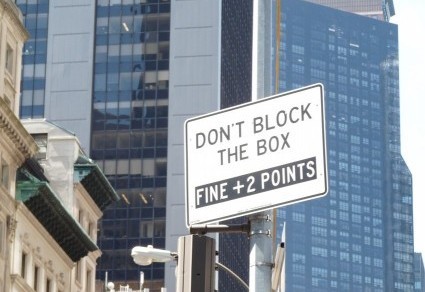


Do you have insurances?

Lately, every time someone mentions a problem with a doctor, prescription, or what physicians call procedures (which are operations to the rest of us), everyone nods and  cites Obamacare as the cause. (I have no idea whether they’re right.)

I’m therefore assuming that this problem too will be blamed on  the Affordable Care Act:

Insurance policies?

Insurance policies?


Do you have health insurances? This physical therapy office accepts them, or I should say it, because insurance has traditionally been correct only as a singular form. Following that rule, the sign should say health insurance plans or types of health insurance. However, the word may be changing to reflect the comparisons we all have to make these days between one health insurance plan and another. Recently I’ve seen several signs advertising clinics that accept many insurances or most insurances. Language evolves, and anyone who doesn’t like the direction of its evolution can always blame this expression on Obamacare (or politicians, who are always an easy and generally a justified target).

Here’s another plural issue, this time with a singular form (menu) in a spot where a plural makes more sense:

No menu?

No menu?


For non-New Yorkers, I should explain that the many restaurants delivering takeout food like to slip menus (plural) under the front doors of apartment buildings, hoping that hungry citizens returning from work will pick one up and order dinner from it. More likely, of course, is that a hungry citizen will step on a menu and do a floppy-armed dance maneuver to recover balance – and then retrieve the offending piece of paper and order dinner from it. Building superintendents and doormen wage war on menu-distributors and the mess they generate. This sign is one tactic, probably ineffective and definitely grammatically incorrect. It is, however, polite.

One more plural, with a twist:

Refiles?

Refiles?


The interesting part of this sign, on a phone store, is the third item: “Prepaid Refiles.” I don’t usually mock spelling, but this one was too tempting. Can’t you picture the clerk, file in hand, sawing away at your phone’s rough edges? Or placing the phone in a file marked “way too many photos” instead of “judicious use of photo capacity”? I’m assuming the sign-writer intended to say “Refills,” but perhaps not. I’m a novice in the phone world. In fact, when I go into a store to “refile” my device, the clerk generally laughs at its antiquity. So if there’s another meaning, please let me know.

Disclaimer: Part of this post originally appeared as a separate page under the category, “Signs of the City,” which I am gradually dismantling.


Time to get to sea

The narrator of Moby Dick explains that when he feels the urge to walk, “methodically knocking people’s hats off,” it is “time to get to sea.”  I know exactly how he feels, because late August in New York has turned me into an even grumpier grammarian than usual.

Two signs illustrate my point. Here’s the first:

What's with the "pre"?

What’s with the “pre”?


I’ve become accustomed to reading ads for a “One Day Sale!” that begins on Friday and ends on Sunday, not to mention “pre-Christmas sales” that start on December 26th and last until the following Christmas Eve. But I barely managed not to rip this sign off the window of a store selling housewares and linens. Why should I shop during a pre sale? (And what happened to the hyphen?) I imagine two possible situations: (1) Buy this blanket today, pre sale, for $50.  Tomorrow the same blanket costs $30. (2) The pre sale price of the blanket is $30. Once you buy it, though, you owe the store $50. That’s the price at the time of sale.

I couldn’t resist either scenario, so I bought a silk flower during the pre sale. The price tag read $5.99. The sign over the flower display read “Up to Half Off!” The clerk charged me $1.95. Do the math, as I did, and you’ll discover why a popular t-shirt declares “5 out of 4 people don’t understand fractions.”

One more, on a Manhattan outpost of a major wireless network:

Where?

Where?


I won’t comment on the fact that the sign unwisely separates Mexico from Latin America, even though Mexico is, in fact, part of Latin America. Instead, I’ll focus on what’s FREE. As written, the sign implies that the caller has to be in Mexico & Latin America to talk and text without charge. Okay, many New Yorkers travel south, so perhaps the sign means that with this wireless plan, they can take their phones and communicate without paying a cent (or a peso or a boliviano or a colon or a something else).  Also possible: New Yorkers can call or text people in Mexico & Latin America from New York – or from somewhere else. I didn’t go into this store, so I can’t give you a definitive answer.

See what I mean about grumpy? If you have a boat I can borrow, please let me know. It’s time to get to sea.


Capital Offenses

A completely unscientific survey of signs in New York City reveals that very few sign-writers understand the conventions of capitalization. Or perhaps they do, and don’t care. Or maybe the store owners wish to associate themselves with the iMac and iPad, with the hope that unconventional capitalization will lead to the level of success Apple enjoys. Regardless, capital offenses abound.

Some sign-writers opt for all caps:

P1010024


Nothing wrong with this practice – on signs – though all-caps employed to “shout” in emails and blog comments can be quite annoying.

Other signs strew capital letters randomly:

P1010071


Notice the “State of the Art Subway Line.” Nothing in Standard English calls for capital letters in those words. Perhaps the sign-writer was excited about the “Second Avenue Subway Project,” which I capitalized, as did the sign-writer, because that’s the name of something, in this case a construction site that was originally scheduled for completion years ago and, contrary to what the sign says, shows no sign of being ready by 2016 – or 2017, for that matter. By the way, in Standard English the word “the” is usually not part of a name and therefore is written in lowercase (non-caps).

One more capital letter sign, on a Fifth Avenue store:

Note "the Renovation"!

Note “the Renovation”!


The usual practice is to capitalize the name of important historical eras, such as the Enlightenment (which lasted a century, give or take a few years) or the Middle Ages (which endured for maybe 1000 years).  This store apparently believes that their construction work will go on for quite a while and hit the history books, or at least Wikipedia.

Full disclosure: part of this post was originally a separate page in the “Signs of the City” section, which I am slowing dismantling and placing in the “posts” portion of this site. As far too many signs say, sorry for the inconvenience.


What’s in a Name

I’m a baseball fan, but even so I can’t avoid a flash of annoyance when I hear the term “World Series” applied to a set of teams based in cities as far north as Southern Canada, as far south as the Southern United States, and as far east and west as the North American coastline. True, players come from a larger assortment of countries than in earlier times, but a real “World Series” ought to include Japanese  and South American teams, at the very least.

That said, it occurs to me that coming up with inclusive and sensitive names is a tough task. When I was preparing to study at the University of Madrid, my US-based Spanish teachers told me that the answer to the question “What are you?” was not “American” (americana) but the Spanish equivalent of “United Statesonian” (estadounidensa). If I called myself americana, the teachers explained, listeners would object because the term rightly applies to South Americans also. My teachers gave me one alternative – norteamericana (North American). No one seemed concerned about Canadians’ feelings, an attitude that unfortunately persists in many areas of US policy.

Of course, the very first time I fielded the “What are you?” question from a Spaniard, estadounidensa was met with a blank look and then “Oh, you mean you’re American.” Mindful of classmates from South America, Central America, and yes, Canada, I never could bring myself to say that I was an americana. So I settled on neorquina (New Yorker) and everyone was happy.

My family went through a similar process. My grandparents answered “Austrian” when asked about their homeland because their village was part of the Austro-Hungarian Empire when they emigrated. My parents claimed “Yugoslavia” as the ancestral site, while I say that my background is “Croatian.”

And then there are states. Some are easy (Californian, Texan, and New Yorker, though the distinction between the city and state in that last one may be problematic). But what do you call a resident of Connecticut? The only answer I’ve heard is Nutmegger, because apparently Connecticut calls itself “the Nutmeg State.” How widespread is that knowledge?

Can we keep up with partitions, annexations, and nicknames when we apply a name to someone’s ethnicity or citizenship? Probably not. The best policy may be to go for the detail (“her grandparents lived in Prague before World War II”) but this method crashes and burns when it hits the widespread American (oops – I mean United Statesonian) ignorance of geography.

I’ll stop here, hoping for suggestions on naming from anyone reading this post, because I don’t have a solution. Besides, it’s time to watch the “Miss Universe” pageant.


House, Home, and Hand

I gnash my teeth whenever I see a restaurant or food store offering homemade pasta, pickles, or whatever. “Who lives here?” I want to ask the waiter or clerk. “Whose home am I eating or shopping in?” But of course I’m too inhibited to challenge someone nice enough to bring me food, even if the same person is overcharging me for my homemade meal. I say nothing and keep my very short, well-gnashed molars to myself.

What the restaurant or store means, of course, is exactly what this restaurant menu states:

House made!

House made! Hand rolled!


Instead of homemade, this orecchiette dish contains house made sausage. (I’d hyphenate the description, but I’m not quibbling.) The sausage is not shipped in, dried or frozen, from a factory somewhere in an area of the country where there’s room to cook ten thousand meals at a time so they can be microwaved one by one in the postage-stamp sized kitchens New Yorkers put up with. The comment about the lasagna in the above menu is even better; the pasta sheets are house rolled. I would buy anything described so eloquently! And before you hop all over me for not noticing that a house can’t roll or make anything, remember metonymy, the figure of speech that allows a closely associated term to substitute for something else – for example, the Oval Office for the actions of the executive who works there.

Another term that pops up all this time is handmade. Check out this sign:

Not sure about the "treatments," but I like the "handmade."

Not sure about the “treatments,” but I like the “handmade.”


What beauty products await consumers inside this store?  The sign implies that they are made on the spot, just for you, by a Luddite who shuns machinery. This scenario may even be accurate, though a recent court ruling – I kid you not! – held that handmade bourbon could legally be made with the help of machines, because everyone knows that you can’t make bourbon without mechanical help. Truth in advertising, never a strong point, bites still more dust with this verdict.

It’s enough to make you retire to your  home to drink some handmade booze.


Station(a) (e) ry

In an old joke, someone asks, “Do you have trouble making up your mind?” The reply: “Well, yes and no.” I thought of this exchange when I saw this sign on an awning:

StationAry

StationAry


I saw this sign on a board in front of the same store:

StationEry

StationEry


The store, which has, to put it mildly, an eclectic inventory, needs a new awning. It sells paper goods and office supplies (stationery), not an adjective meaning “fixed in one place” (stationary).   The sandwich board could use some revision, too, as you can sell  “beauty aids” (objects) but not  “aides” (people who assist).  Still, at “99 Cents Plus,” the price is right, even if the spelling isn’t. See you later. It’s time to go shopping.